

Modular / Semi Modular
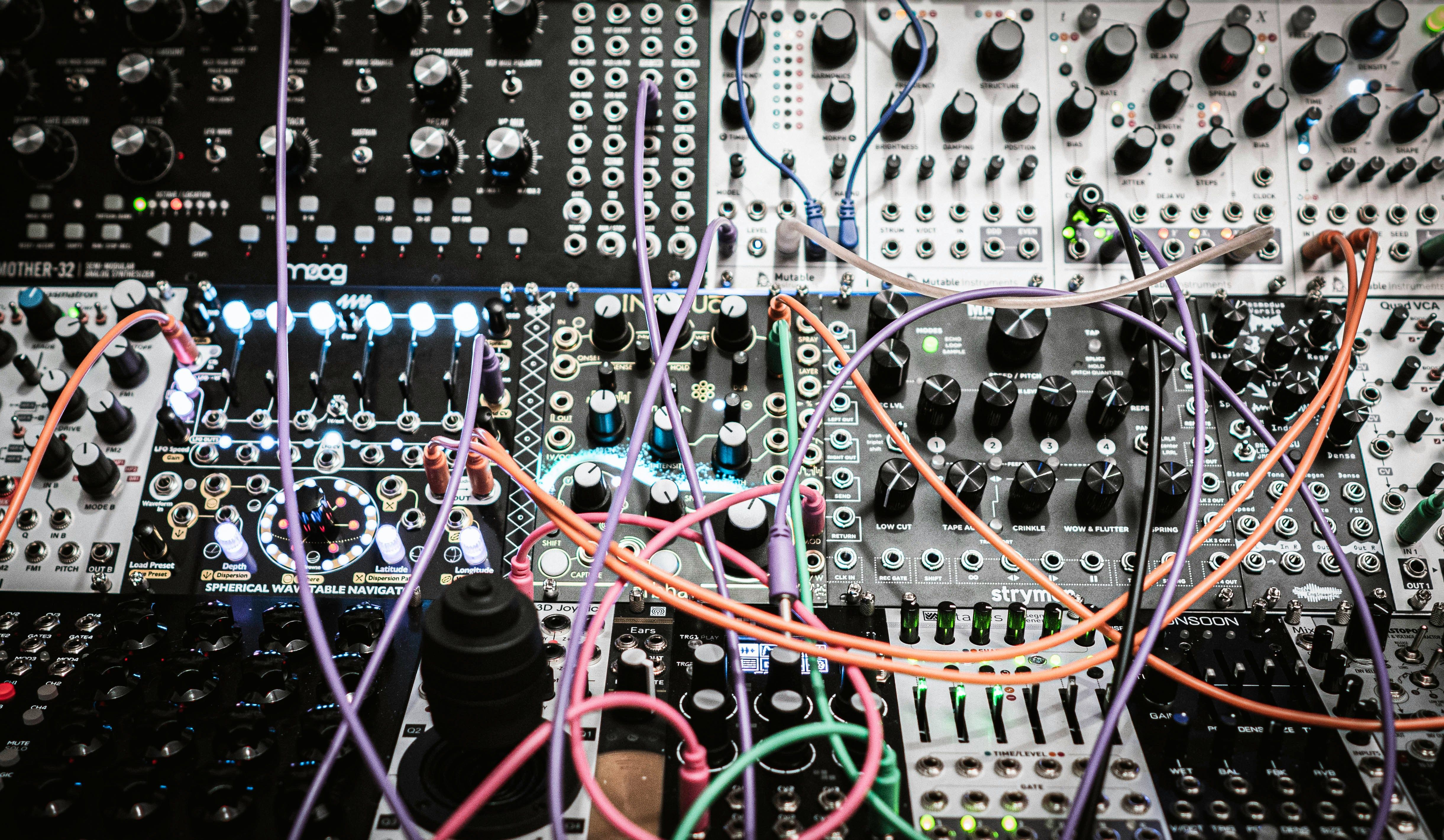
When Bob Moog and Don Buchla invented modular synthesizers in the early 1960s, they started a philosophy of synthesis that seems futuristic even now. It separates synth building blocks into their component parts so they can be recombined and manipulated in ways their creators could have never imagined.
Semi-modular synthesizers have one signal path 'normalled' and require no cable 'patching' to make an initial sound. This signal path can then be easily overridden by plugging cables into the relevant patch points, allowing synthesists to quickly expand into experimental sonic territory. Like an evil-fighting robot team, the more modules in a setup, the more powerful each becomes.
- $ Min$ Max
Need Help Choosing Your Next Synth?
Subtractive, FM, wavetable, granular - there's a lot of ground to cover. Our guide to synthesis types breaks down every major category: what each type does, what it's best at, and which synth to reach for if you want to try it. It's a good place to start if you're picking your first synth or adding a new colour to your setup.