

Start with your budget
Set a realistic figure before you fall in love with something. Electric guitars broadly split into three tiers. Entry-level guitars get you a reliable, playable instrument to learn on. Mid-range guitars bring better hardware, tuning stability and tone. Pro-level guitars offer premium woods, pickups and finish quality that hold their value for years.
One thing new players often miss: an electric guitar makes very little sound on its own. You'll also want an amp, a cable and a tuner to get started, so factor those into your total.
Single-coil vs humbucker: which pickups do you need?
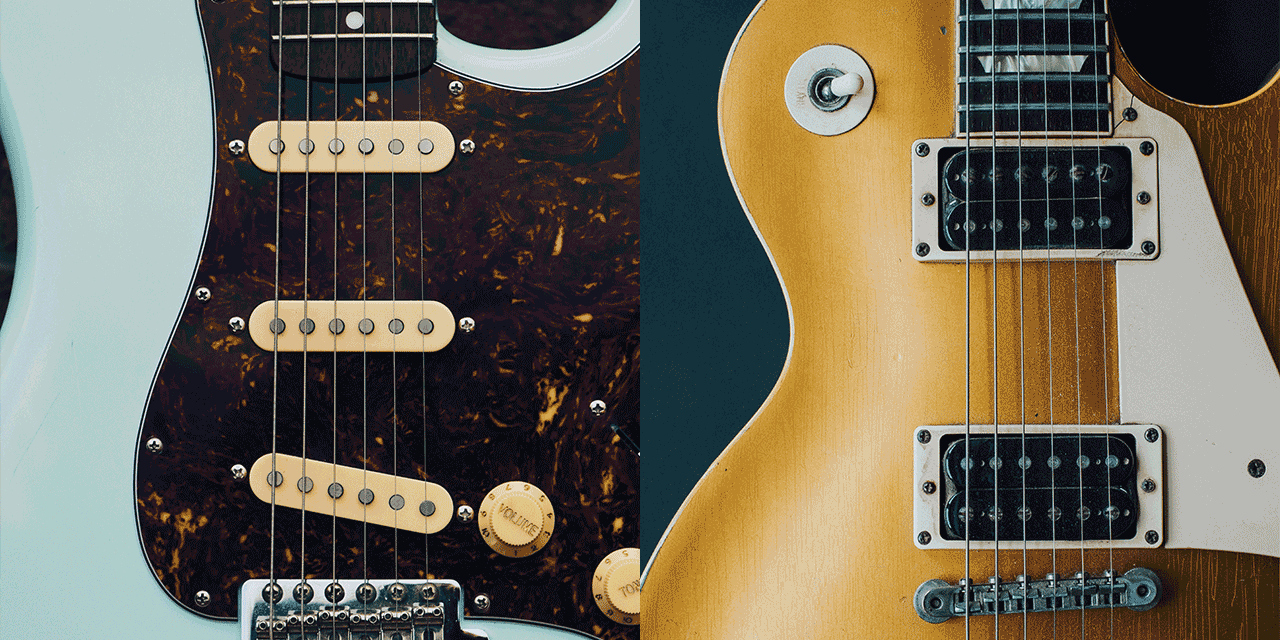
Pickups shape most of your tone, so this is the decision that changes your sound the most. Here's how the two main types compare.
| Single-coil | Humbucker | |
|---|---|---|
| Sound | Bright, clear, articulate | Thick, warm, powerful |
| Output | Lower | Higher |
| Hum | Can pick up background hum | Cancels most hum |
| Best for | Funk, blues, country, classic rock | Rock, metal, jazz, heavier styles |
If you love more than one of those styles, look for a guitar that mixes both pickup types. And if you want to change the character of a guitar you already own, new electric guitar pickups are one of the most cost-effective upgrades you can make.
Body types: solid, semi-hollow and hollow
The body affects how a guitar resonates, feeds back and feels against you.
- Solid-body is the workhorse of rock and pop. It handles high volume and gain without unwanted feedback, which is why it's the most common choice.
- Semi-hollow adds warmth and a touch of acoustic resonance while still coping with a fair bit of gain. A great all-rounder for blues, indie and jazz.
- Hollow-body gives the warmest, most resonant tone, favoured in jazz and rockabilly, though it feeds back more easily at high volume.

Match the guitar to your style
Your genre points you toward the right combination of pickups and body. As a rough guide, blues and funk players tend to favour single-coils in a solid or semi-hollow body, while rock and metal players lean toward humbuckers in a solid body. Jazz players often reach for a hollow-body with humbuckers.
Brands specialise too. Ranges like Squier and Epiphone are known for accessible, dependable guitars, while PRS, ESP, Fender, Jackson and Gretsch each bring their own voice and heritage. The best move is to play a few and trust your hands.
Neck feel, scale and playability
This is the part beginners underrate and experienced players obsess over. Neck shape, fingerboard width and scale length all change how a guitar feels. Thinner necks suit smaller hands and fast playing, while chunkier necks give some players more to grip. There's no correct answer here, only what feels comfortable to you, so try before you decide where you can.
Playability also depends on the setup: string height, intonation and neck relief. A guitar that fights you is usually one that hasn't been set up well, not a bad guitar.
Special cases: left-handed and extended range
Left-handed players don't have to settle for a converted right-handed guitar. Browse the dedicated left-handed electric guitars range. If you tune low or play heavier styles, a longer scale gives tighter, clearer low notes, so look at baritone, 7 and 8-string guitars. And if you want acoustic tones from an electric-style instrument, our acoustic-electric guitars bridge the gap.
Don't forget the rig
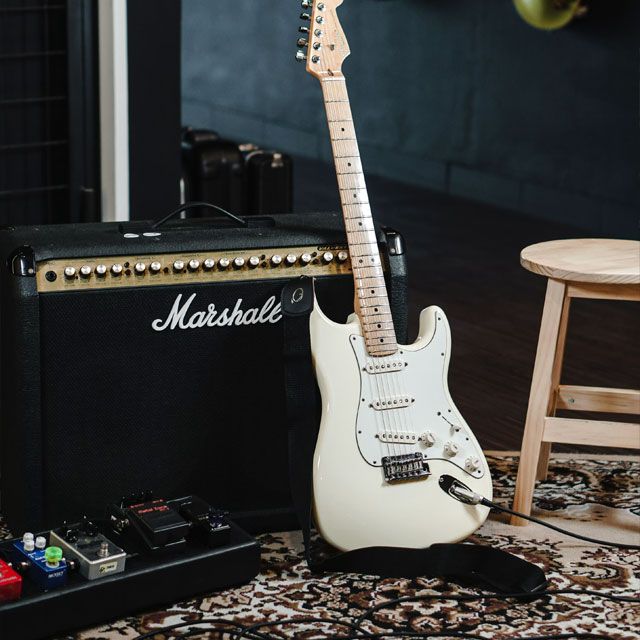
The guitar is only half the sound. To hear it properly you'll need an amp, and once you're comfortable, a multi-effects pedal opens up a world of tones. Players gigging or recording often add a guitar cabinet for more air and volume. Round out your kit with a comfortable strap, a protective case or gig bag, and a stand so it's always within reach at home. Fresh strings can make an older guitar feel brand new.
Why a proper setup matters
Two identical guitars can feel worlds apart depending on their setup. That's why every guitar we sell can be seen and played in our demo rooms, and why our in-store guitar techs give instruments a proper setup and quality check. A well-set-up guitar is easier to play, stays in tune, and sounds its best, which is exactly what keeps a new player motivated.
Guitar Buying FAQs
Match four things to how you play: your budget, the pickups, the body type, and the neck feel. If you're starting out, put comfort and tuning stability first. A guitar you enjoy holding is one you'll practise on.
A comfortable, affordable, well-set-up guitar that stays in tune. Ranges like Squier and Epiphone are popular first guitars for good reason. The instrument that plays easily beats the one with the fancier name at this stage.
Yes. An electric guitar produces very little acoustic sound on its own, so you'll want an amp to hear it properly. A small practice amp is plenty to start with.
Most first guitars sit in the entry-level tier, which buys a dependable, playable instrument. Spending a bit more improves hardware and tuning stability. Just leave room in the budget for an amp, a cable and a tuner. Check the current pricing across our electric guitars range.
Ready to find yours?
Explore the full electric guitars range at Mannys, with brands to suit every budget and style, all in stock and ready to ship. Free shipping on orders over $100, 30-day easy returns, and 2-hour Click and Collect from any of our six stores across Melbourne, Sydney, Brisbane and Perth.
Not sure which one is right for you? Our team plays this gear every day, so get in touch or drop into a store. It's the best advice you can give a musician.