

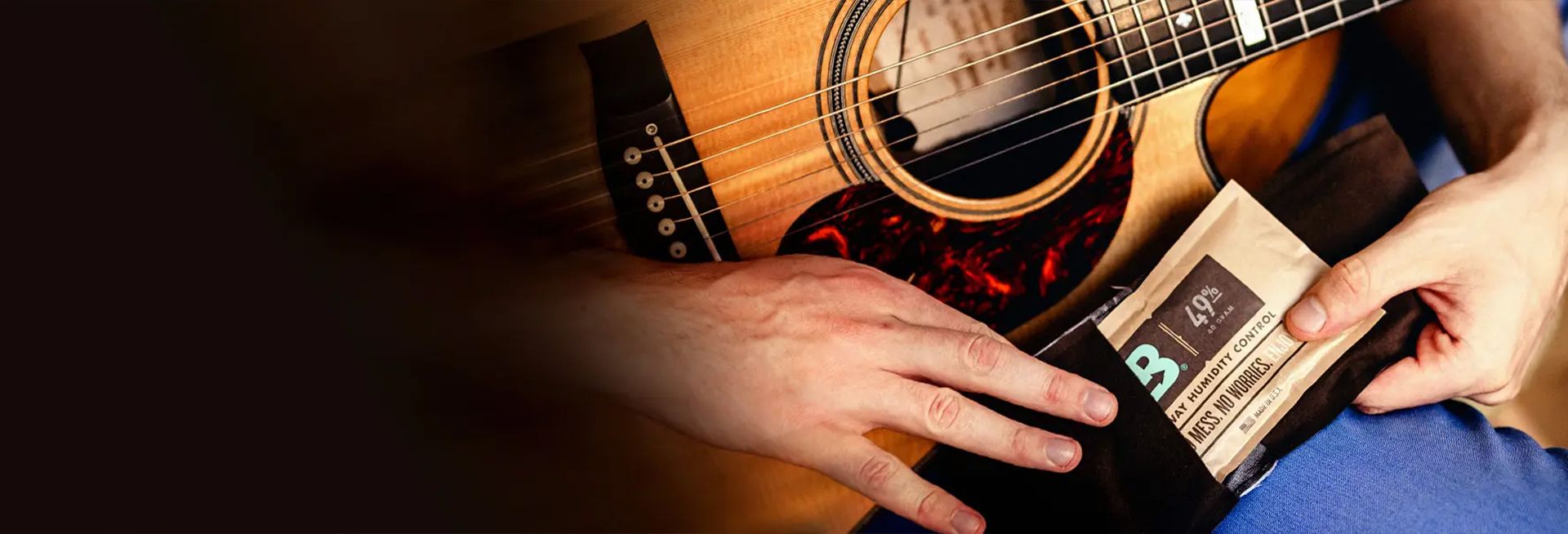

Why your wood instrument needs humidity control (and how Boveda makes it easy)
If you've ever pulled a guitar out of its case in the middle of a dry Melbourne winter and felt the fret ends poking out the sides of the neck, you've already met the problem this article solves. Wood is a living material. It breathes and it moves, and it keeps responding to the air around it long after the tree it came from stopped growing. In a country that swings from sticky summers to bone-dry, heater-blasted winters, that's a real issue for anyone who owns an instrument worth looking after.
What dry air or too much moisture does to timber
When the air dries out, wood gives up its own moisture and shrinks. On a guitar that shows up as sharp fret ends (the "fret sprout" you feel running your hand down the neck), a dropping action, buzzing, and in the worst cases splits and cracks in the top or back. Bowed instruments, woodwinds and anything else built from timber are just as exposed. Heating and air conditioning make it worse, and so does a dry gig venue or the cabin of a plane.
The other direction causes trouble too. Damp air swells the wood and can bring warping, a mushy action, glue joints letting go, and mould moving in. Most wood instruments are happiest sitting somewhere in the mid-40s to mid-50s percent relative humidity. The trick is keeping them there without babysitting a hygrometer.
Where Boveda comes in
Boveda is a two-way humidity control pack, and that "two-way" bit is the clever part. Instead of only adding moisture like an old-school sponge or soundhole snake, it both releases and absorbs to hold your case at a steady level. When the air's too dry, it gives moisture back. When it's too damp, it pulls moisture in. No rewetting, no guessing, no fiddling.
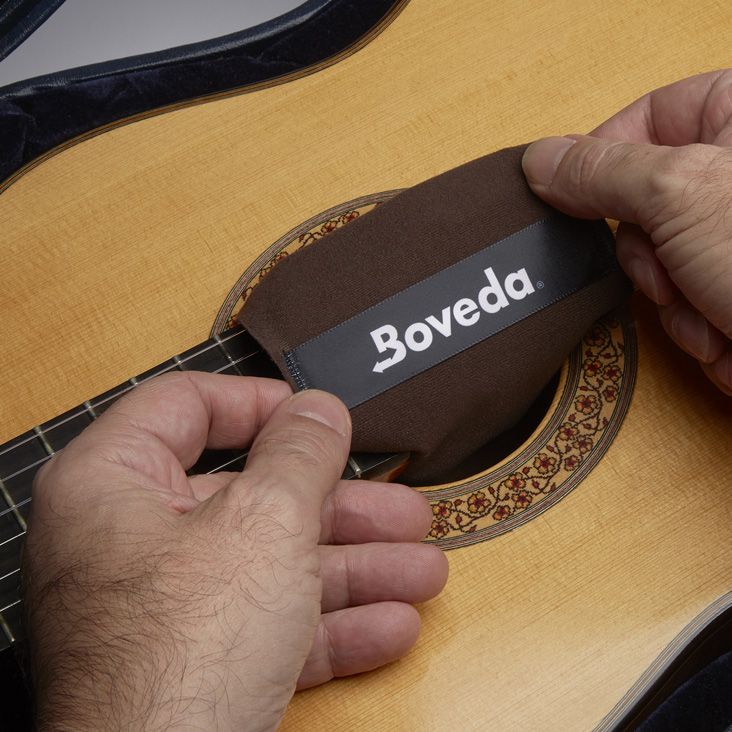
How To Use Boveda Packs
Slip the Boveda pack into its fabric holder, pop it in the case with your instrument, and close the lid. That's genuinely it.
A few things worth knowing:
The fabric holder isn't optional. It keeps the pack off the timber and acts as a barrier if a pack ever gets punctured. Don't tear open the brown packet itself either. Only the clear cellophane overwrap comes off; the brown pack stays sealed. And don't run Boveda alongside a sponge or humidifier snake, because they work against each other and you'll chew through the pack for no reason. When the pack starts to stiffen up, usually around the three-month mark, swap it for a fresh one.
Which kit for which instrument
There are two starter kits. The Large kit suits acoustic guitars, larger woodwinds, and bigger bowed or fretted instruments. The Small kit is the one for electric guitars and basses, smaller woodwinds, and smaller bowed or fretted instruments. Reeds and bows have their own smaller holders as well, so nothing wooden misses out.
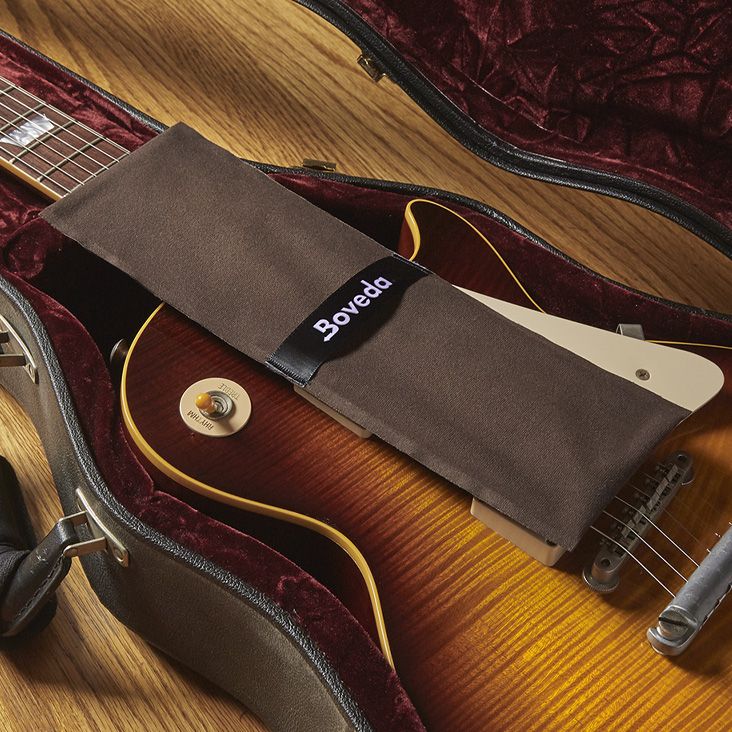
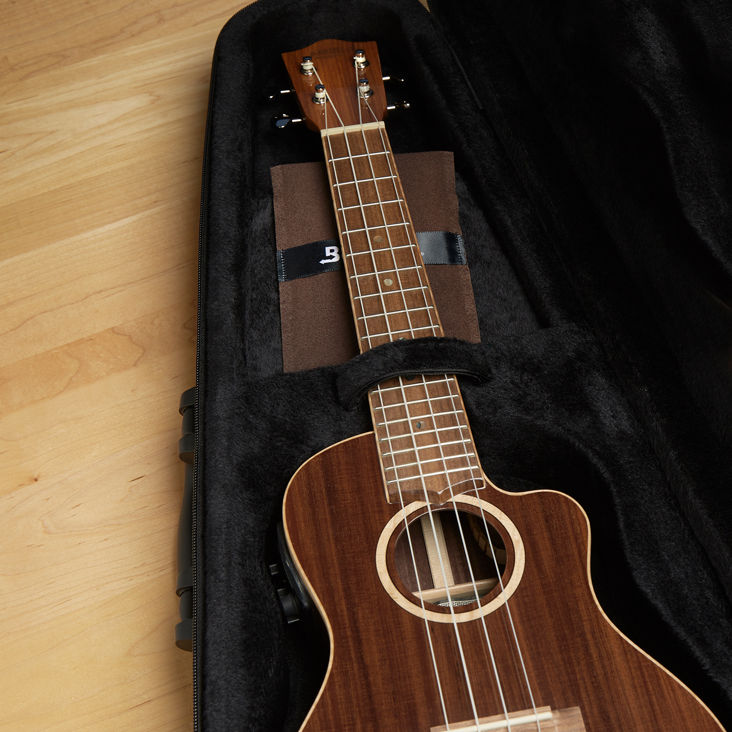

If your case is timber
One thing that's easy to miss: a solid wood case can hold twice as much timber as the guitar sitting inside it. Left unseasoned, that thirsty case will quietly rob the moisture meant for your instrument. Season a wood case first with dedicated seasoning packs, then run your normal kit as usual.
The short version
Humidity control is one of those quiet habits that saves you a repair bill and keeps an instrument feeling the way it did the day you brought it home. Set it, close the case, and check back in a few months.
If you're not sure which kit suits your instrument, our team plays this gear too. Come have a chat in store, or get in touch and we'll point you the right way.
Grab your Boveda 2-Way Humidity Control Packs at Mannys Music - online or in-store. Check out the Boveda range.